
Fleur Barron’s Cornelia was exquisite, with that distinctive, recognizable and seductive timbre, technically flawless, and a magnetic stage presence. For me, she was the revelation of the performance (I may be romantic, but at times I saw reminiscences of Lauren Bacall’s Mrs. Hubbard or Jane Birkin’s Christine Redbern).
Il Trillo Parlante, Mattia Marino Merlo
Fleur Barron, in her Philharmonic debut, almost went over the top with her displays of emotion, bending the pitch like an opera singer performing an especially serious number from the Black spiritual rep. And operatic they were. There is even a dramatic scene in the oratorio, a comic dialogue on the nature of privilege drawn from Edith Wharton’s House of Mirth. In a later movement, setting words apparently misattributed to FDR—“If ever there are, in this country, people who are rich enough to own this country, then they will own it”—she climbed up into her break in pure chest voice, poco vibrato, to create a deeply disturbing sound, like a mezzo in a Verdian character role.
Parterre.com, Kevin Ng
Lang’s setting for mezzo-soprano solo is at times beautiful and haunting but always imbued with raw emotion. Barron’s direct, pointed delivery of the words in her rich, scintillating voice conveyed the urgency that Lang captured in the music.
Seen and Heard International, Rick Perdian
Here, the Woman, sung with intensity and razor-sharp tone by Aušrinė Stundytė and fiercely acted, receives him in a bodybag right at the start from a couple of armed guards, but is unable to bring herself to look inside…She wanders into the night and is replaced in the forest by another woman, sung by mezzo Fleur Barron, who is also searching. It transpires that she is ‘the woman with white arms’, the man’s secret lover. She has come to bid him a tender goodbye. Barron’s sumptuous, dark mezzo was lavished tenderly on Mahler’s long farewell, from emotional outbursts to the soft repeated final word, ewig (forever), trailing off into the distance.
Gramophone, Mark Pullinger
Da steht Mezzosopranistin Fleur Barron auf der Bühne. Und man staunt: über ihre natürliche Intensität, ihre energiereiche Tonproduktion, den großen, bis ins Sopranige reichenden Stimmumfang und den weiten Klangraum, den sie sich unforciert erobert. Manches klingt nach Brigitte Fassbaender. Die Ausweglosigkeit des lyrischen Ichs, Mahlers emphatisch auskomponierte Leere, all das kann Fleur Barron hörbar machen.
Merkur.de, Markus Thiel
Die Einspringerin für Wiebke Lehmkuhl ist ein Ereignis. Barron hat ein einzigartiges Gespür für Mahler. Jede Silbe betont sie mit einer fein ausgewogenen Dosis an Ausdruck, atemberaubend färbt sie ihre Stimme in den für Mahler typischen Klangfarben. Sie agiert wie eine Tänzerin, anmutig und verletzlich. Das „Ewig“ am Ende taucht sie virtuos in den Klang der fulminant musizierenden Wiener Philharmoniker.
Kulture.Kurier, Susanne Zohl
What Harding achieved in Das Lied von der Erde was to masterfully take us on a journey through a kaleidoscope of emotions, culminating in a truly overwhelming rendering of that colossal song ‘Der Abschied’. Harding always found the right atmosphere for each moment of the work, assisted by Barron, who presents a voice of beautiful timbre, confident and rounded, and capable of exquisite nuances and wide dynamics. She shone with great success in ‘Von der Schönheit’, but also in a very special way in ‘Der Abschied’, from the beautiful pianissmi on the words “der Welt schläft ein” to the overwhelming ending, including a moving interpretation of the passage “er stieg vom Pferd und reichte ihm den Trunk des Abschied dar. A magnificently performed Mahler.
Scherzo, Rafael Ortega Basagoiti
In the title role, Fleur Barron exhibits a mezzo of rich mahogany during Ariana’s opening folksong, sung with sensual self-assurance. More importantly, she captures the character’s smoldering, controlled passion. Never once does she submit to the temptation to “go big” that must come with playing a part like this. There’s a moment in her performance that perfectly sums up the character’s essence. Yonas has gone to meet his father, and Adriana simply repeats the same mantra-like phrase: “If he’s meant to kill him, then he’ll kill him.” Barron’s grounded low notes convey, not hopeless resignation, but a sense of deliberate resolve—a mother’s miraculous ability to tap into the calm at the center of her being in the midst of a storm.
Opera Wire, Joe Cadagin
Bates and the musicians [play with] striking scope and dramatic gesture…But the tone is set by Fleur Barron in the title role. The Singaporean-British mezzo leans into the role’s tragic scope; when she speaks of ‘torment’ it doesn’t just throb but shakes Purcell’s ground bass until it seems like the melodic circle can never close again. There’s no fear of colouring outside the lines, and her Dido—generously shaded and gestural—refuses to be confined, packing five acts of tragedy into the opera’s short scope.
Gramophone, Alexandra Coughlan
Wo bist du Licht! was written in 1981 and is scored for mezzo-soprano – the superb Fleur Barron, who is mentored by Hannigan – percussion, strings and tape. Nothing could prepare us though for this stunning performance of Vivier’s settings of Friedrich Hölderlin and the composer himself. The long instrumental opening took on a markedly ritualistic slant under Hannigan’s direction; initially, the voice joins in before morphing into a more Schoenbergian Sprechgesang. Barron’s voice verged towards the contralto at times, which suited the music perfectly – there is no lessening of strength in her lowest reaches….It is frankly impossible to imagine a more convincing performance of this piece. Everything came together: Barron magnificent, faultless; the LSO under Hannigan offering their fullest concentration and virtuosity. In the vocal line, extended vocal techniques were effortlessly integrated into the musical argument – certainly, they were no mere effects, a marker of deep understanding of the music’s vocabulary.
Seen and Heard International, Colin Clarke
Adriana was sung by mezzo soprano Fleur Barron. Of rich voice, she is a formidable technician of deep musicality and has a powerful stage presence, transforming herself from the sexually ripe young woman into the mature woman who must explain herself to her grown son.
Opera Today, Michael Milenski
Barron has a rich-toned, highly expressive mezzo timbre with an extraordinary range….the songs were put over with such zest, style and enthusiasm that I felt I was carried immediately into the emotional heart of at least a dozen different societies or civilizations.
The Times, Richard Morrison
Downloads


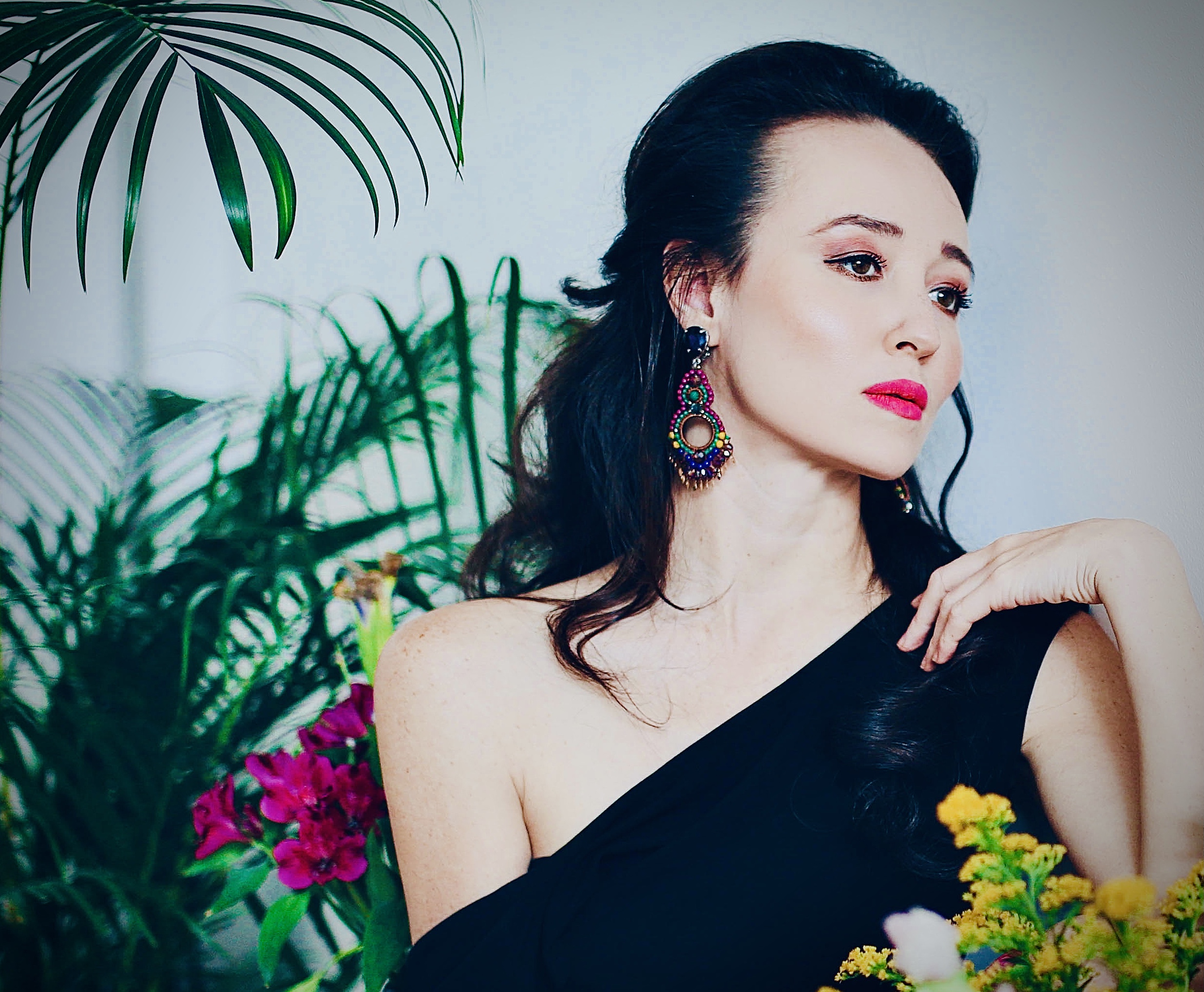
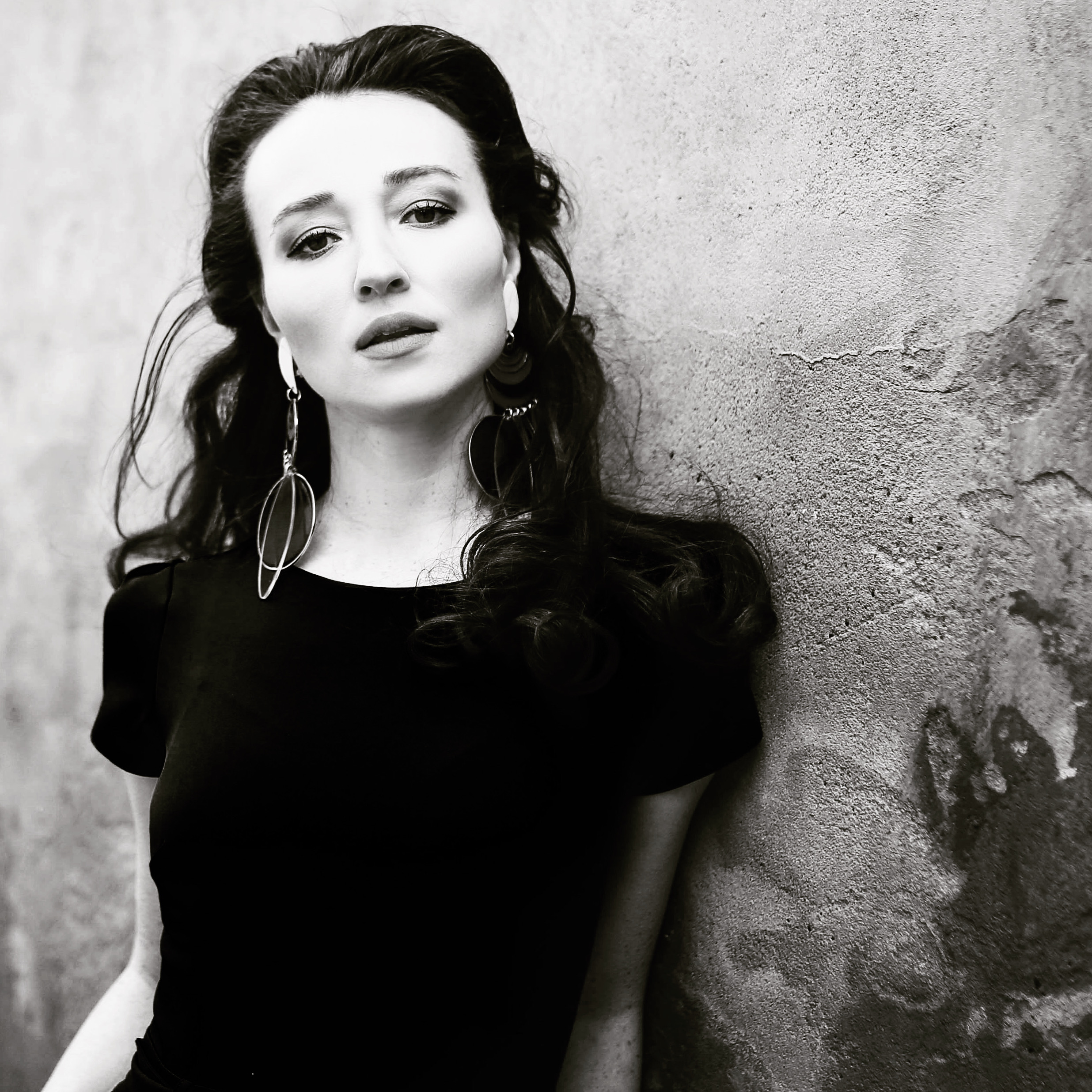




Hailed as “a knockout performer” by The Times, GRAMMY Award-winning mezzo Fleur Barron is an artist of striking versatility, celebrated for her vivid interpretations of repertoire spanning baroque, Weill, contemporary, and 19th century French music. Recognized as a leading Mahler interpreter of the new generation, she is equally known for her collaborations with living composers and curating multidisciplinary projects that explore connections across cultures and musical styles.
In the 26/27 season Fleur appears as the soloist for the Nobel Prize Concert with Sir Antonio Pappano and the Royal Stockholm Philharmonic in a new work by Hannah Kendall – a piece they also perform with the London Symphony Orchestra at the Barbican. Closely identified with the music of Mahler, Fleur performs her signature piece, Das Lied von der Erde, in concert, staged and choreographed versions: with the L.A. Philharmonic in a staged version with regular collaborators Esa-Pekka Salonen and Peter Sellars; the Czech Philharmonic and Daniel Harding; the Melbourne Symphony Orchestra and Jaime Martin; the Spanish National Orchestra and Josep Pons; and the Royal Ballet Covent Garden. Fleur also tours Mahler’s Kindertotenlieder to Vienna, Amsterdam and Linz with the Mahler Academy Orchestra.
Further symphonic engagements in 26/27 include Berio’s Folksongs on tour with the Mahler Chamber Orchestra, as well as with the Orchestra Sinfonica di Milano. Fleur returns to favourite French repertoire with Ravel’s Shéhérazade for her debut with the Baltimore Symphony Orchestra under Jonathon Heyward, and with Lili Boulanger’s Faust et Hélène for her debut with the Orchestre de la Suisse Romande under Daniel Harding. Additional orchestral collaborations include a tour with the Hong Kong Philharmonic of Falla’s Siete Canciones Populares and arias from Carmen, and orchestrated Schubert Lieder with the Hawaii Symphony.
Fleur’s 26/27 operatic engagements include a return to Opéra de Bordeaux for a staged production of Mozart’s Requiem, and leading roles in two world premieres by regular collaborator Bryce Dessner: Herakles Mad at Theater Basel, and Night Sky with Exit Wounds – a staged monodrama for mezzo and ensemble, with poetry by Ocean Vuong – at various European festivals.
On the recital platform, Fleur’s 26/27 diary features a 6-city U.S. tour with Trio Afiori, a voice-clarinet-piano trio she created with Anthony McGill and Gloria Chien; her Kabuki Winterreise project at Wigmore Hall and Schloss Elmau; recitals with Joseph Middleton at Wigmore Hall and Garsington Opera; and a recital of Mahler and Alex Ho at Wigmore Hall.
Highlights of last season included debuts with the Berlin Philharmonic and Kirill Petrenko in Mahler Symphony no.8, with the New York Philharmonic under Gustavo Dudamel in the world premiere of David Lang’s The Wealth of Nations, and with the Salzburg Festival, where she reunited with Esa-Pekka Salonen and Peter Sellars for a staged creation featuring Mahler’s “Abschied” from Das Lied von der Erde. With Salonen and Sellars, Fleur also starred as the title role in Kaija Saariaho’s Adriana Mater with the San Francisco Symphony, and later at the Teatro dell’Opera di Roma. Recent baroque roles include Cornelia in Handel’s Giulio Cesare at Maggio Musicale Fiorentino under Gianluca Capuano, Purcell’s Dido and Æneas with La Nuova Musica under David Bates, and in a recording for Pentatone; Ottavia in Monteverdi’s L’Incoronazione di Poppea at the Aix-en-Provence Festival, and Penelope in Monteverdi’s Il Ritorno d’Ulisse in Patria with ensemble I Gemelli.
Highlights of recent seasons include tours of Mahler’s Das Lied von der Erde with both the Bavarian Radio Symphony Orchestra and Swedish Radio Symphony Orchestra under Daniel Harding; Schönberg’s Four Songs, op.22 with Vladimir Jurowski and the Rundfunk-Sinfonieorchester Berlin; Mahler’s Kindertotenlieder and Symphony no. 3 with the Czech Philharmonic under Semyon Bychkov; Mahler’s Des Knaben Wunderhorn and Mozart’s Requiem with Nathalie Stutzmann; Claude Vivier’s Wo bist du Licht and Stravinsky’s Pulcinella with Barbara Hannigan and the London Symphony Orchestra; a tour and recording of Ravel’s Shéhérazade and Trois Poèmes de Mallarmé with the Barcelona Symphony Orchestra and Ludovic Morlot. Fleur’s discography extends from Hasse and Purcell to Brahms, Barber, Ravel and Saariaho with labels such as Deutsche Grammophon and Pentatone.
Born in Northern Ireland to a Singaporean mother and British father, Fleur grew up in Hong Kong and later New York. She holds degrees from Columbia University (B.A. Comparative Literature) and Manhattan School of Music (M.M. Vocal Performance).

Handel, Nel tuo seno amico sasso
A.Mahler, Die Stille Stadt & Laue Sommernacht
One Morning turns into an Eternity
Mahler, Wo die schönen Trompeten blasen
Ravel, Asie
Saariaho, Lullaby Aria
Purcell, When I am laid in earth
Massenet, Va! Laisse couler mes larmes
Strauss, Wie du warst
Contact
General Management
IMG Artists
Thomas Walton, Senior
Vice President, Artist Management
Email:[email protected]
imgartists.com
Management (The Americas)
Bill Palant, Étude Arts
Ansonia Station, Post Office Box 230132
New York, New York 10023
Tel: 929.777.0775
Email: [email protected]