Paul Appleby’s Tamino sings with warmth and grace…
inews.co.uk, Michael Church
Paul Appleby was a first-class St. John, his lyric tenor capable of great power but also subtlety.
Dallas Morning News, Scott Cantrell
Le Candide de Paul Appleby est tout simplement parfait. Son ténor est juste du début à la fin, le phrasé soyeux, le timbre captivant et une incroyable longueur de souffle qu’il nous donne par deux fois d’admirer : en conclusion du « It must be me » au I puis du « Nothing more than this » au II.
Forum Opera, Thierry Verger
Au sommet, Paul Appelby nimbe son Candide d’irrésistibles charmes mozartiens, insurpassable dans les passages élégiaques, grâce à une longueur de souffle phénoménale et un phrasé charriant des tombereaux de poésie.
Díapason, Emmanuel Dupuy
Pear’s voice was famously described as being of “modest decibels and limited color”. He did, however, have immaculate diction and penetrating communicative skills. Tenor Paul Appleby has the latter abilities, but is also gifted with a lyric tenor that is youthful, fresh, and gleaming. In “Pastoral” and “Hymn,” Appleby was a troubadour of yore with his sense of playfulness and ease of singing. Each repetition of “Blow, bugle, blow, set the wild echoes flying” in Britten’s setting of Tennyson’s “Nocturne” was a penetrating study in shading and vocal color. “Dirge” found the tenor at his most dramatic, as he sang with near-overwhelming force and ferocity.
New York Classical Review, Rick Perdian
At the heart of the conception is the Machiavellian Caesar, whom the tenor Paul Appleby portrayed with charismatic nastiness on opening night. Wearing a blue suit, his hair slicked back, gesturing floridly while twisting in his seat, Appleby fashioned a vivid picture of hollow authority. Is he a snappily dressed dictator? Or a brassy studio chief? The psychological differences between the two are minor. Appleby maintained a beauty of tone despite the role’s taxing demands, and his delivery of Caesar’s ode to Roman might was a tour de force that drew unsettled applause from the audience. This tyrant was both laughable and terrifying: we’ve met his like before, and we will meet it again.
The New Yorker, Alex Ross
Paul Appleby’s Caesar was one hell of a challenge, but he portrayed the character’s authoritarian, patriarchal bombast with energy and electricity. His extended speech, complete with projections, crowds of soldiers, and vox populi marching across the stage, was dedicated to the tumultuous times, then and now. Overall, Appleby sang with an abundant authority that communicated the character’s rage and desire to remain powerful.
Opera Wire, Lois Silverstein
Tenor Paul Appleby is a stunning Octavian, the future Caesar Augustus, making of him an emotional, yet calculating, political animal. He’s terrifying in the long Act 2 scene in which he extolls Roman expansion into empire. He sings from a cutout above the stage, surrounded by video of his own head, multiplied, and of 1930s crowds, with the chorus below onstage.
San Francisco Classical Voice, Lisa Hirsch
Appleby’s bright tenor voice provided a youthful reading to Octavian, and he imbued his character with an almost childlike sensitivity in the beginning of the opera that turned Octavian into some kind of spoiled brat. However, Appleby fully came into his own in the second act, where he unleashed an evil persona as Caesar (and stamina too, as he had to sing above a blasting orchestra and chorus for an extended period of time) hellbent to conquer the world!
Parterre.com, Michael Anthonio
Ax worked well with Paul Appleby, whose dulcet and precise tenor gave us the often breath control-testing lines of Janík with uncommon beauty of tone. He found the moments of liquid lyricism between the tormented, angular outpourings and tapered his dynamics accordingly. No one in my experience, save for Nicolai Gedda, has ever taken the final song’s lung-busting pair of high Cs in his stride; Appleby, at home elsewhere when the composer supplied high tessitura, managed them pretty creditably…Appleby traced the emotional upheaval of the “seduced” farm-boy with conviction and welcome restraint.
Opera News, David Shengold
Especially when working with a sensitive pianist like Hanick, Appleby is a deft, eloquent interpreter of Lieder…He gave words full expressive and musical value. In this repertory, that demands treating the frequent textual repetitions afresh each time they occur, an art few young singers master. Appleby has…Appleby should offer audiences Schubert frequently. Other than Matthew Polenzani—one generation his senior—one can scarcely think of another classically trained American tenor so accomplished in this special and rewarding realm.
Opera News, David Shengold
In many ways Paul Appleby was an ideal Gerontius…He delivered a forthright reading …produced consistent clarion-edged tone… Appleby’s voice was of tremendous vitality, and he had command of words.
Classical Source, David Truslove
Paul Appleby plays Pelléas with a soft and nuanced tenor voice. He not only masters the music vocally-technically, but he experiences the character in all his sensitivity.
Klassieck Centraal, Lucrèce Maeckelbergh
Mr. Appleby was in spectacular form as Tom. Floppy-limbed and animated by idle nervous energy he was every inch the “shuttle-headed lad” described in the libretto. His roomy, relaxed tenor was a course of unalloyed pleasure, especially in crescendos in which it bloomed without any hint of strain or steel. If this performance is any indication, his turn next season as Belmont in Mozart’s “The Abduction from the Seraglio” will be one to watch.
The New York Times, Corinna da Fonseca-Wollheim
Paul Appleby has all the components of an accomplished recitalist. His tenor is limpid and focussed, but with a range of color unusual in an instrument so essentially lyric: it’s a sound that can give pleasure over a recital’s two-hour span. His singing is scrupulous and musical; the voice moves fluidly and accurately…Appleby is a singer with a full-throttle commitment to the song repertoire.
Opera News, Fred Cohn
Downloads



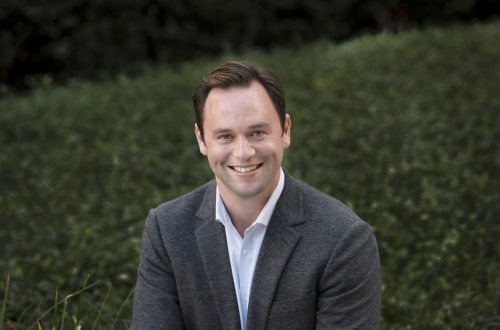
Admired for his interpretive depth, vocal strength, and range of expressivity, tenor Paul Appleby is one of the most sought-after voices of his generation. He graces the stages of the world’s most distinguished concert halls and opera houses and collaborates with leading orchestras, instrumentalists, and conductors. Opera News writes, “[Paul’s] tenor is limpid and focused, but with a range of color unusual in an instrument so essentially lyric… His singing is scrupulous and musical; the voice moves fluidly and accurately.”
Paul Appleby’s concert calendar for the 2024-25 season includes the title role of Berlioz’ La damnation de Faust with Hannu Lintu leading the Gulbenkian Orchestra and Choir, Haydn’s The Creation with Martin Pearlman and Boston Baroque, concert performances of Puccini’s La Rondine with Sir Antonio Pappano and the London Symphony Orchestra, John Corigliano’s captivating Poem in October, inspired by a rich and imaginative poem by Dylan Thomas, with the Chamber Music Society of Lincoln Center, and Evangelist in Bach’s Matthäus-Passion with Kent Tritle at the Cathedral of St. John the Divine. The tenor returns to the stage of the Metropolitan Opera for the company premiere of John Adams’ Antony and Cleopatra, reprising the role of Caesar which was written for him, in a staging by groundbreaking director Elkhanah Pulitzer.
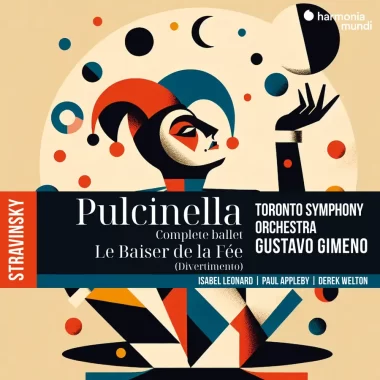
Last season Paul Appleby made his debuts at La Monnaie in the world premiere of Cassandra, written by Bernard Foccroulle and Matthew Jocelyn under the baton of Kazushi Ono, and at the Gran Teatre del Liceu in the European premiere of Antony and Cleopatra, and he returned to Glyndebourne singing Tamino in Die Zauberflöte led by Constantin Trinks in a production by Barbe & Doucet. Igor Stravinsky featured prominently in the American tenor’s concert diary with performances of Les Noces led by Esa-Pekka Salonen both with the San Francisco Symphony and Orchestre de Paris, Pulcinella with Music Director Gustavo Gimeno and the Toronto Symphony Orchestra, and in the title role of Œdipus Rex with Santtu-Matias Rouvali leading the Munich Philharmonic. Assaying the role of the Evangelist in Schmidt’s seldom-heard oratorio Das Buch mit sieben Siegeln, he achieved great success with Music Director Fabio Luisi leading the Dallas Symphony Orchestra.
Paul Appleby gave the world premiere of Antony and Cleopatra at San Francisco Opera conducted by Music Director Eun Sun Kim and other highlights of the recent past include the title role of Bernstein’s Candide for the Opéra de Lyon, Los Angeles Philharmonic performances of John Adams’ Girls of the Golden West under the baton of the composer as well as Die Zauberflöte with Music Director Gustavo Dudamel, Handel’s Samson with the Dunedin Consort at the Edinburgh International Festival, Elgar’s The Dream of Gerontius with David Zinman and the Bamberger Symphoniker, Bach’s Matthäus-Passion both with the New York Philharmonic and Hong Kong Philharmonic conducted by Jaap van Zweden, Beethoven’s Ninth Symphony with Marin Alsop leading the Chicago Symphony Orchestra, Britten’s Serenade for Tenor, Horn, and Strings with the Met Chamber Orchestra at Carnegie Hall, and a wide range of repertoire and on numerous occasions in North America and Europe with his frequent musical partner Manfred Honeck.
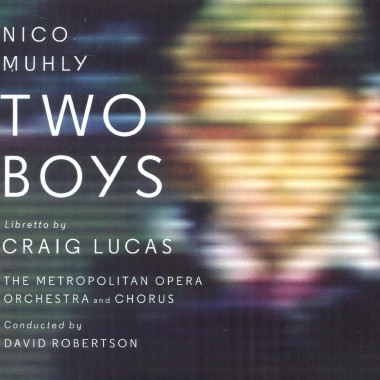
A leading artist of the Metropolitan Opera, where his association with the company has yielded critically acclaimed performances, Paul Appleby has bowed in Die Meistersinger von Nürnberg led both by Sir Antonio Pappano and James Levine, Rodelinda conducted by Harry Bicket, the title role of Pelléas et Mélisande conducted by Yannick Nézet-Séguin, The Rake’s Progress under the baton of James Levine, and the North American premiere of Nico Muhly’s Two Boys with David Robertson. Celebrated as a distinguished Mozartean, he has bowed at the Metropolitan Opera in the leading tenor roles of Don Giovanni and Die Entführung aus dem Serail.
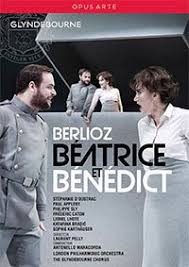
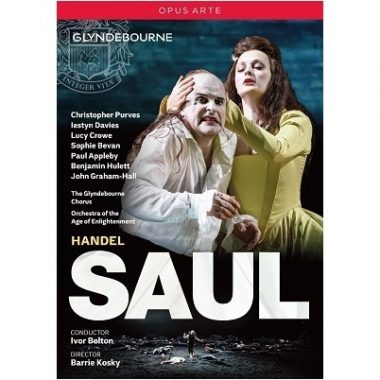
Operatic performances span both world premieres and beloved classics and have included Pelléas et Mélisande at Dutch National Opera led by Stéphane Denève; the world premiere of John Adams and Peter Sellars’ Girls of the Golden West at the Dutch National Opera and San Francisco Opera; Stravinsky’s The Rake’s Progress at the Festival d’Aix-en-Provence, Oper Frankfurt, and Dutch National Opera; Handel’s Saul directed by Barrie Kosky at Glyndebourne and Houston Grand Opera; and Die Zauberflöte at Teatro Real, San Francisco Opera, and Washington National Opera. Closely affiliated with the title role of Béatrice et Bénédict, he has been lauded in performances at Glyndebourne directed by Laurent Pelly and conducted by Antonello Manacorda, at the Opéra de Paris under the direction of Philippe Jordan, and in a new production for his debut with Oper Köln conducted by François-Xavier Roth.
Respected as a consummate recital artist, Paul Appleby has presented solo appearances at the Wigmore Hall with Malcolm Martineau, toured North America extensively with pianists Natalia Katyukova, Ken Noda, and Conor Hanick, and has given his Tanglewood debut in a performance of Janáček’s The Diary of One Who Vanished with Emanuel Ax. With pianist Wu Han, he has sung Schubert’s masterpiece, Winterreise, under the auspices of The Schubert Club.
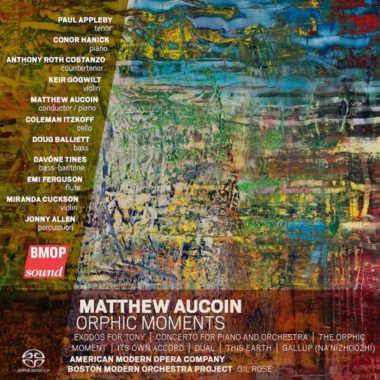
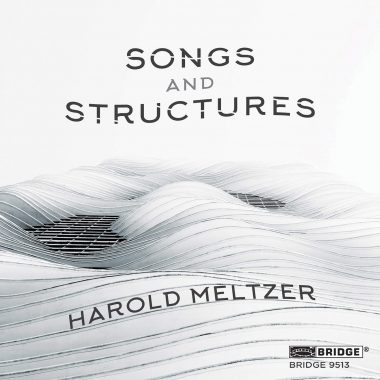
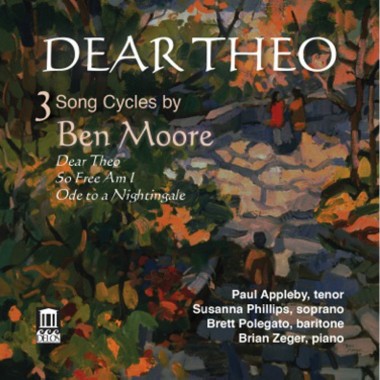
Paul Appleby’s recording catalogue includes Nico Muhly’s opera Two Boys, recorded live by the Metropolitan Opera and released by Nonesuch; DVDs of Glyndebourne’s acclaimed presentation of Handel’s Saul and Berlioz’s Béatrice et Bénédict released commercially by Opus Arte; Dear Theo, the first album dedicated solely to works by American composer Ben Moore released by Delos; and Songs and Structures, a portrait album of recent vocal and chamber works by composer Harold Meltzer released on Bridge Records; in addition to other recordings by Virgin Classics, and EMI’s Juilliard Sessions.
Mr. Appleby is a founding core member of the American Modern Opera Company (AMOC) and is a graduate of the Metropolitan Opera’s Lindemann Young Artist Development Program. A recipient of an Artist Diploma in Opera Studies at The Juilliard School, he also earned a Master’s Degree from Juilliard and a Bachelor’s Degree in English Literature and in Music from the University of Notre Dame.

Don Giovanni, Metropolitan Opera
Antony and Cleopatra, San Francisco Opera
Pelléas et Mélisande, Dutch National Opera
Schumann Lieder, Philadelphia Chamber Music Society
The Rake’s Progress, Dutch National Opera
Girls of the Golden West, San Francisco Opera
Béatrice et Bénèdict, Glyndebourne, Opus Arte
Contact
General Management
Bill Palant, Étude Arts
Ansonia Station,Post Office Box 230132
New York, New York 10023
Tel: 929.777.0775
Email: [email protected]
Representation (Europe)
Harrison Parrott
Shirley Thomson, Director & Head of Vocal
Email: [email protected]
www.harrisonparrott.com